What It Means to Make a Living From Tradition in India Today

A collaboration between BeejLiving and MeMeraki that looks beyond objects to the people who make them, exploring four artisans’ work, hopes, and the futures they are trying to build.
MeMeraki began as a deeply personal project for founder Yosha Gupta, rooted in her love for Indian art and the people who practice it. What started with hand-painted luxury handbags soon grew into a larger purpose: creating meaningful visibility and livelihood for traditional artists.
MeMeraki sits at the intersection of heritage and technology, offering a thoughtful, accessible way to experience Indian culture in the modern world. It connects over 350 master artisans with a global community of learners and collectors, with live online workshops, art kits, masterclasses, and a curated marketplace.
The four artisans featured in this piece represent living traditions shaped by years of practice, discipline, and inherited knowledge. Their work is inextricably linked to daily life, livelihood, and identity. Beyond preserving craft, they speak of continuity, dignity, and the hope that their skills will remain relevant, respected, and economically viable.
Through personal stories, Beejliving examines how heritage, work, and aspiration intersect in the lives of Indian artisans.
Kailash Pradhan, Gond Artist, Dindori, Madhya Pradesh
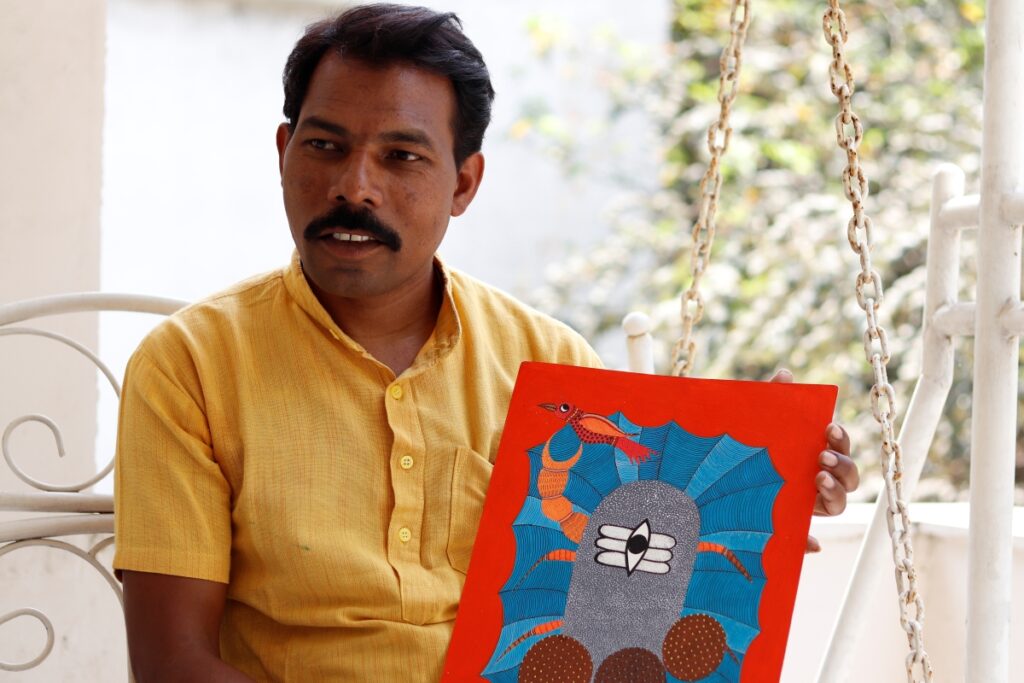
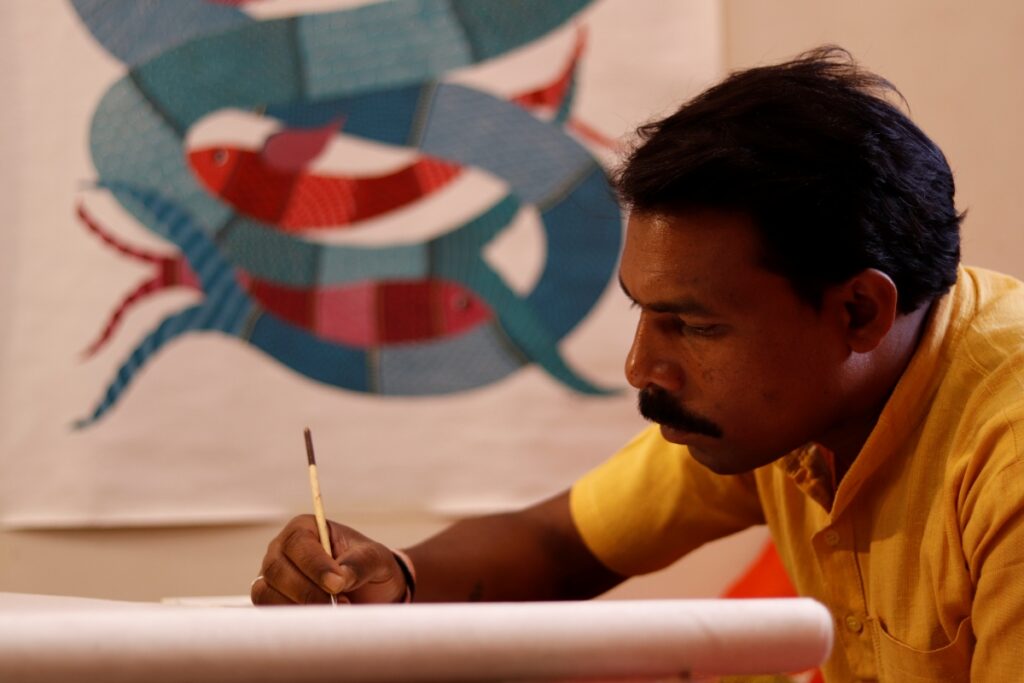
Kailash Pradhan is a dedicated Gond artist with over fifteen years of practice rooted in cultural tradition and inherited knowledge. Trained under the guidance of his uncle, his work reflects a lineage-based learning that has evolved into a distinctive personal style.
A central element of his practice is the Cherchera pattern, inspired by the Cherchera festival of the Gond community, symbolising continuity, celebration, and cultural memory. Nature is Kailash’s primary source of inspiration, and his artworks frequently depict elephants, birds, trees, forests, and wildlife, rendered through vibrant colours and intricate rhythmic detailing that echo his close bond with the natural world.
What are your biggest learnings of 2025?
This year taught me that hard work and faith never go to waste. There were many ups and downs, but I realised that if we do our work with sincerity, the paths open up on their own. This year gave me a great lesson in patience, perseverance, and staying connected to my roots.
Looking ahead to 2026, what excites you most about your craft?
What excites me most is that Gond art is now finding a place in people’s hearts. I am both hopeful and determined about the future. Hopeful because people are beginning to understand the language of our art. And determined because I am constantly working to take it to new heights, because it’s not just my work, but my identity.
What kind of projects, collaborations, or commissions would you like to do more of, and what would you like to leave behind?
I would like to do more work where art can be showcased on a larger scale, such as large-scale wall paintings, school and museum projects, collaborations with designers or interior decorators, and international exhibitions.
I would like to leave behind work where there is no creative freedom, or where compromises have to be made in a hurry. Now I want to focus my attention on projects that make an impact and convey a deeper story to people.
What brings you the most joy?
I get the most joy when my paintings bring a smile to someone’s face. When someone says, “Your art has transformed the atmosphere of our home, “that moment is my greatest reward.
How has your craft evolved over the generations? What is the future of this art form?
In the time of our elders, Gond art was limited to mud and walls. From generation to generation, this art has travelled from canvas, pens, and brushes to the digital world.
Today, our art has reached clothing, products, and architecture. I believe that in the coming years, this art will reach even larger platforms, and the new generation will present it to the world in their own unique ways. This blend of tradition and modernity will strengthen its future.
What would you like to tell your customers and the government about your work? What do you expect from them to ensure this craft flourishes for the next generation?
To the customers, I would like to say that when you embrace Gond art, you don’t just buy a painting, you carry forward a story, a culture, and the dream of an artist. From the government and institutions, I hope that tribal artists receive more platforms, better training, and regular opportunities.
If the next generation receives proper guidance, respect, and job security, then our art will not only survive but will also emerge in an even more powerful form.
Adarsh, Mural Artist, Kerala
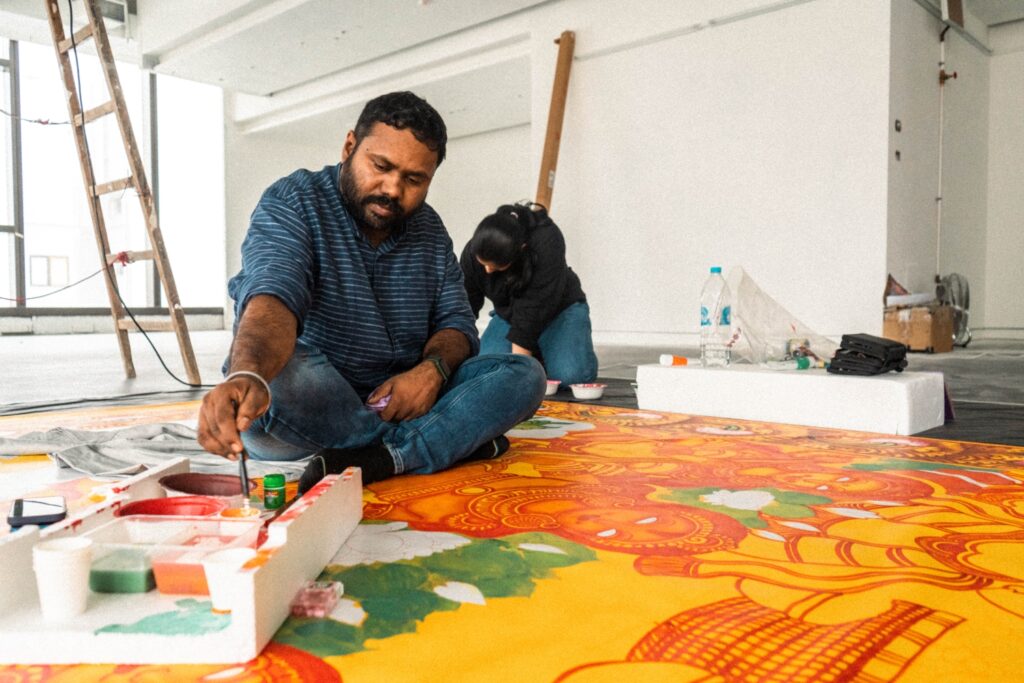
Born in Thiruvananthapuram, Adarsh Appukkuttan is an artist and art conservationist whose practice is rooted in a deep commitment to Kerala’s mural heritage. Trained between 2003 and 2008 in the traditional Guruvayur school of mural painting, his grounding lies in the rigorous discipline and iconographic precision of the form.
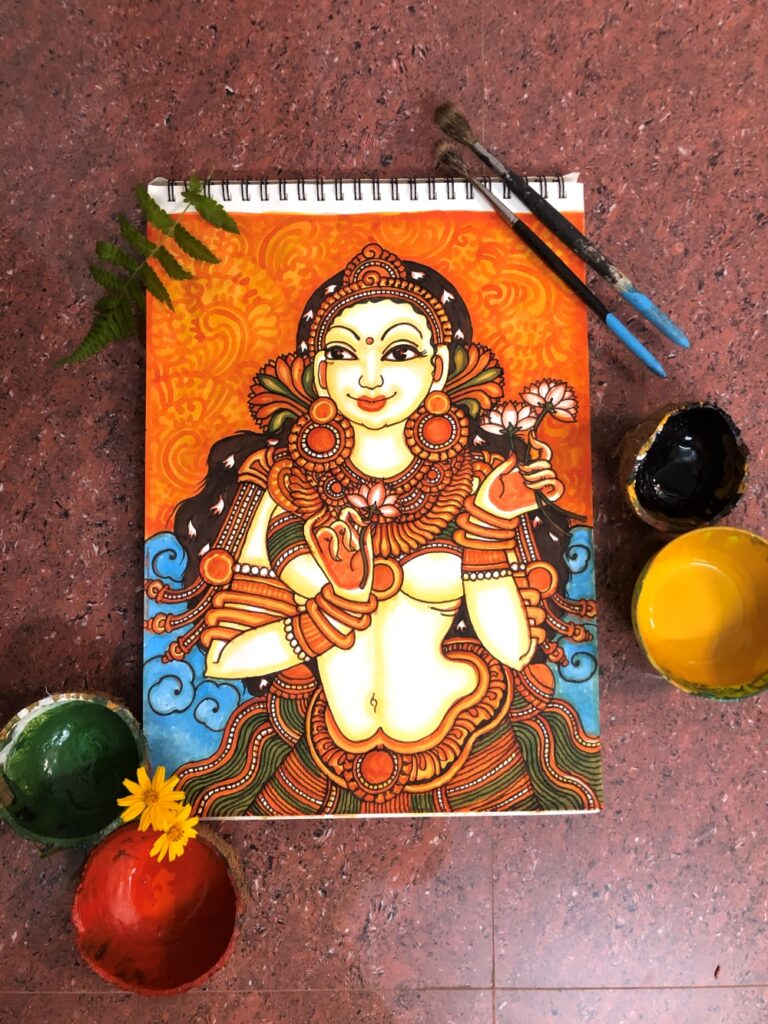
Appukkuttan has worked closely with government institutions and UNESCO on the protection and restoration of historic mural sites, contributing to the preservation of a fragile visual legacy. His own artistic practice draws from the aesthetic vocabulary of Kerala’s temple murals dating from the 15th to the 19th centuries, of rich mineral pigments, rhythmic line work, and sacred narratives, while expanding the tradition through contemporary compositional sensibilities.
What are your biggest learnings from 2025?
Tradition survives only when we actively reinterpret it. Through my projects, travels, and interactions, I realised that Kerala mural painting is not limited to temples or classical spaces anymore; it can breathe in modern homes, international walls, digital platforms, and public spaces.
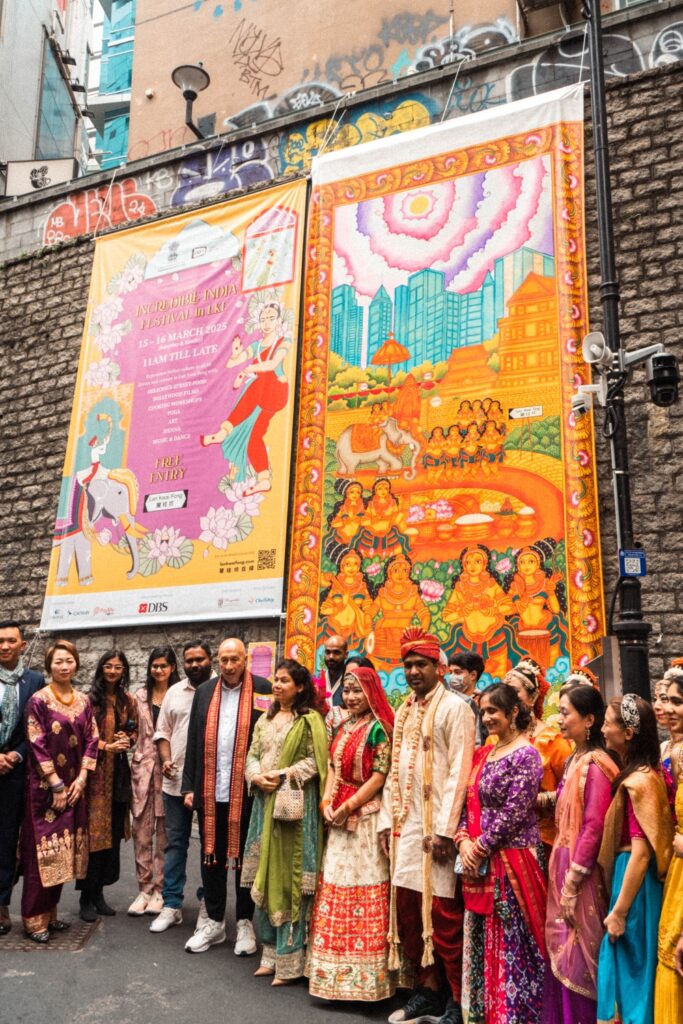
I also learned the value of patience: every mural, every stroke, every colour layer teaches me that true craftsmanship can’t be rushed. In 2025, I worked on my first international project in Hong Kong, where I created a mural in collaboration with local volunteers. The concept was inspired by an Indian procession, and the artwork stood approximately 6.5 meters tall. It was a proud moment for me to take Kerala mural art to a global audience. I also had the opportunity to exhibit my work during this project.
And most importantly, I learned that people, across countries and cultures, deeply appreciate authenticity. When I remain true to the roots of Kerala murals, the work speaks for itself.
What do you look forward to in 2026?
I feel deeply hopeful and strongly determined.
There’s a growing global curiosity for traditional art forms and spiritual symbolism. People today are searching for meaning, calm, and connection, qualities that Kerala mural painting naturally carries.
What feels most alive is the possibility of expanding this ancient tradition into new mediums, new cultures, and new contexts while still preserving its purity. The determination comes from a responsibility: to protect the original techniques, natural colours, discipline, and philosophy behind the craft so future generations inherit something uncorrupted.
What kinds of projects, collaborations or commissions would you like to work on?
I would love to work on more large-scale murals in public or spiritual spaces, international collaborations where Kerala murals interact with other art traditions, projects that allow creative freedom, storytelling, mythology, and surreal reinterpretations, and workshops where I can share the discipline and philosophy behind the art and heritage restoration work, where traditional methods are respected.
What I would like to let go of are commercial rush jobs that compromise quality, projects where clients want “quick art” instead of real mural work, and anything that dilutes the authenticity of Kerala mural painting or demands non-traditional shortcuts.
What makes you the happiest?
The moment when the final varnish goes on a mural, when the colours come alive, and the painting starts to breathe, brings me the greatest joy. What also brings me happiness is when people look at my work and feel peace or a spiritual connection, when a student understands the soul behind a single brushstroke and when I sit in silence with natural colours preparing for a new creation. Art becomes happiness when it becomes meditation.
How has your craft evolved over generations?
Traditionally, it was practised only in temples and palace walls. It was a devotional, disciplined, almost sacred act, and artists followed strict iconography and natural colours.
Now, it lives on canvases, walls, pottery, textiles, and digital formats. Artists experiment with themes, mythologies, surrealism, and contemporary stories, and it is seen in homes, hotels, museums, and international exhibitions
The future of Kerala mural art is incredibly promising, as long as its core principles remain protected. It will continue to expand globally, evolve through collaborations, and adapt to new media and technologies.
I have had the opportunity to bring Kerala mural into new spaces and narratives, for instance, through a collaboration between MeMeraki and Apollo Hospitals, where I depicted the steps of self–breast examination using Kerala mural motifs. Projects like these prove that this traditional art form can address modern themes while retaining its authenticity.
How would you like customers and the government to support your work?
To customers, I would say that a Kerala mural is not just a decoration.
Kerala Mural art is a disciplined tradition with philosophy and history; thus, please value the time, effort, and authenticity behind the work. Support original artists instead of mass-produced imitations and give the artist space and freedom; the best work comes from trust, not pressure.
The governments need to preserve art institutes like Guruvayur’s Institute of Mural Painting, which is a cultural treasure. It needs to provide grants, scholarships, and platforms for mural artists, create national and international exhibitions, cultural exchanges, and mural festivals and include Kerala murals in tourism, heritage, and educational programs.
What message do you have for young artists?
To partake in art education rooted in authenticity, take more opportunities to learn natural colours and traditional techniques and have respect for craft, not just commercial demand.
Mahamaya Sikdar, Kantha Embroidery, Shillong
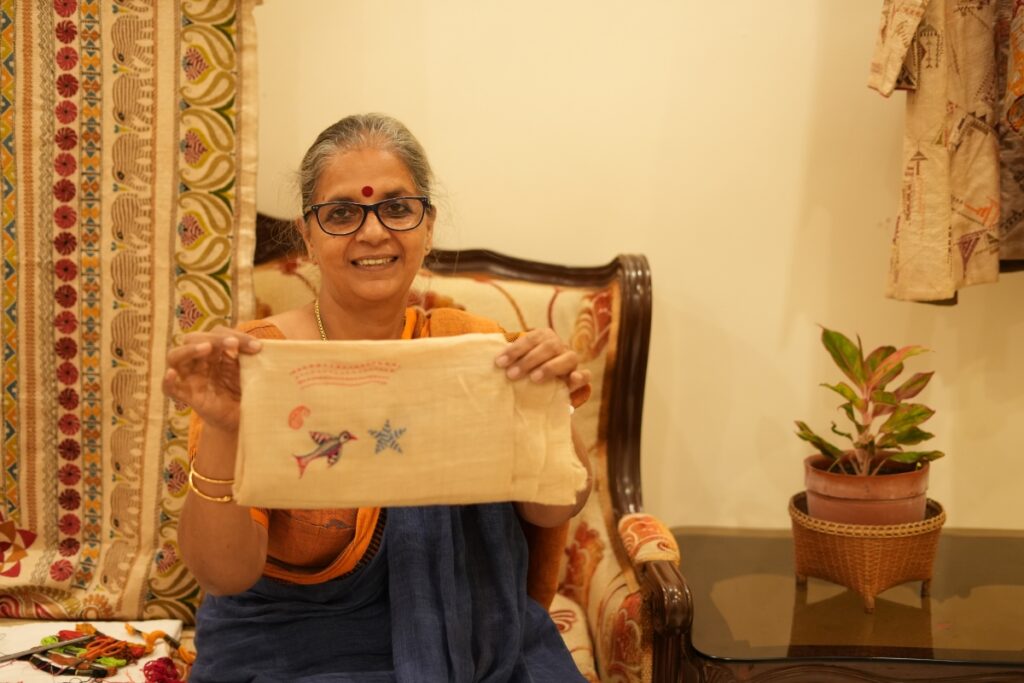
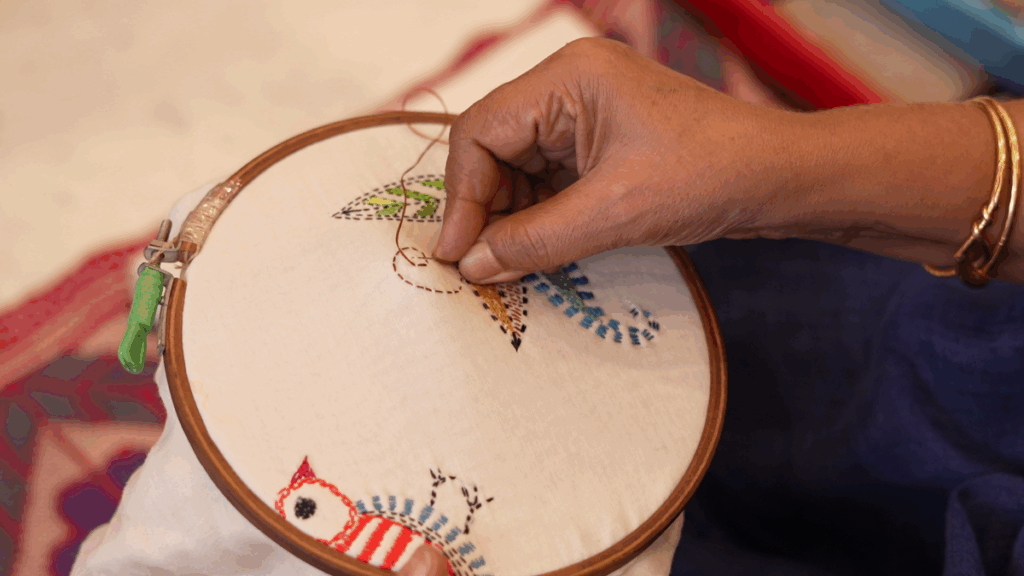
Mahamaya Sikdar is a recipient of both the President’s Award and a National Award, embodying a lifelong devotion to textiles and living heritage. Her relationship with craft began early, shaped by observation, patience, and practice. She learned the intricate language of Kantha from her maternal lineage, absorbing not just technique but the philosophy of care and continuity embedded in the stitch.
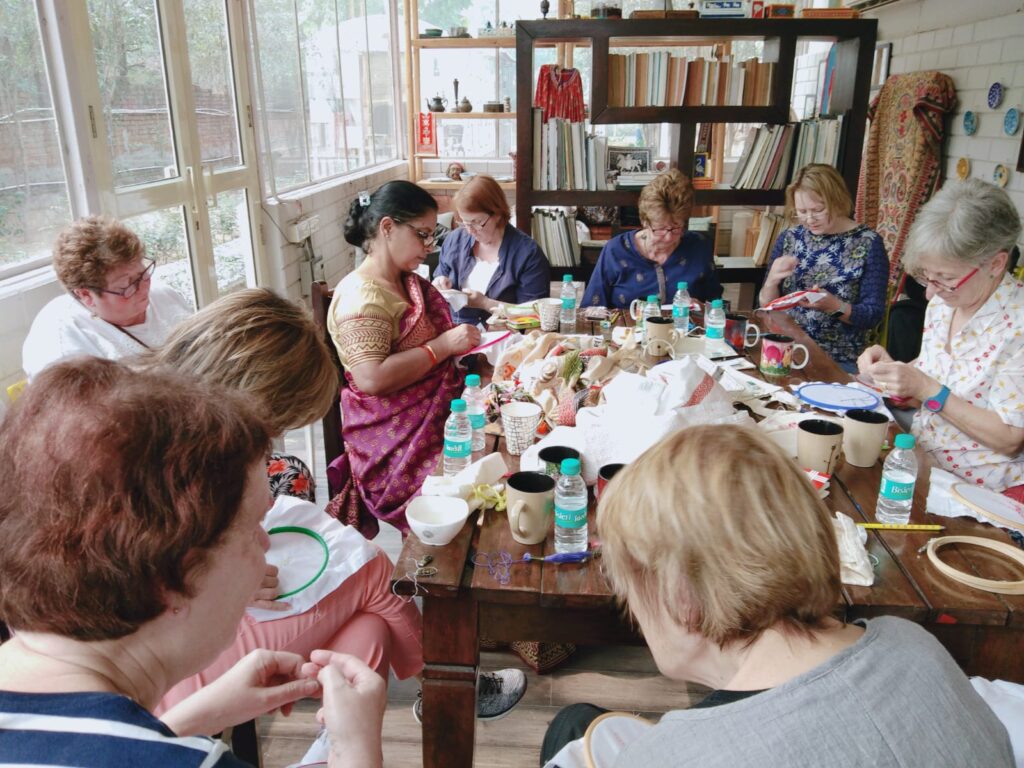
Today, Mahamaya Ji leads and mentors a collective of nearly 300 women artisans, passing on her knowledge with generosity and rigour. Working closely with artisans, she guides, corrects, and encourages their quilting work. While some quilts demand nearly a year of meticulous labour, her steady leadership ensures others are completed within months. Through her work, Mahamaya Ji sustains livelihoods, nurtures confidence, and safeguards Kantha as a living, evolving tradition for future generations.
What are your biggest learnings from 2025?
Art survives when the artist survives. Tradition must evolve. I learnt to honour my roots while embracing new ideas, new designs and new ways of telling our stories. Sharing my artwork openly brought new opportunities for me.
What do you look forward to in 2026?
I am certain that 2026 is arriving with immense possibilities. The wealthiest individuals of our country have begun to take serious note of art and artists, and these shifts make the coming days truly promising in every sense. As for our Kantha embroidery, I am deeply hopeful. World over, I have received extraordinary appreciation and heartfelt love from craft lovers. Their response has affirmed my faith.
How would you like customers and the government to support your work?
I would like to tell every craft-loving buyer and our government that art and craft cannot survive unless the artist survives.
Countless exquisite crafts of our country have already vanished into history, and many more are slowly fading away. We don’t have strong, well-structured infrastructure to support these traditions. Whatever system exists benefits only a very small group, while the vast majority of artisans remain without proper education, support or long-term vision from the authorities.
Given the enormous potential of our cottage and craft industries, the government must create a comprehensive, forward-looking plan to uplift artisans -ensuring fair opportunities, financial security and dignified livelihoods. This action can’t be symbolic; it must be sincere, urgent and far-reaching.
Buyers must also understand and respect the true value of handmade crafts. When an artist doesn’t receive fair recognition or compensation for their creativity and labour, the quality of the craft inevitably declines. We are already witnessing this in many of our markets today. Financial insecurity prevents artisans from focusing on excellence, and a nation that cannot nurture its creative community cannot hope to command respect on the global stage.
How has your craft evolved over generations?
What began as a humble household practice of stitching old clothes with love and necessity has grown into a powerful artistic language. What was once created quietly in the village courtyard is now recognised across the world as a sophisticated textile art. With the support of thoughtful patrons, conscious buyers and modern platforms, Kantha will continue to grow.
What brings you happiness?
When I see rural women or members of the indigenous community from a remote corner of the state who have trained under me and have been able to make themselves capable of taking financial responsibility for themselves and for their families, I feel an indescribable joy. For any artist, the greatest reward is to witness the traditional arts of our ancestors being practised by a capable new generation – enriched, reinterpreted and adopted to meet the needs of our time.
Krishna Tashi Palmo, Thangka Artist
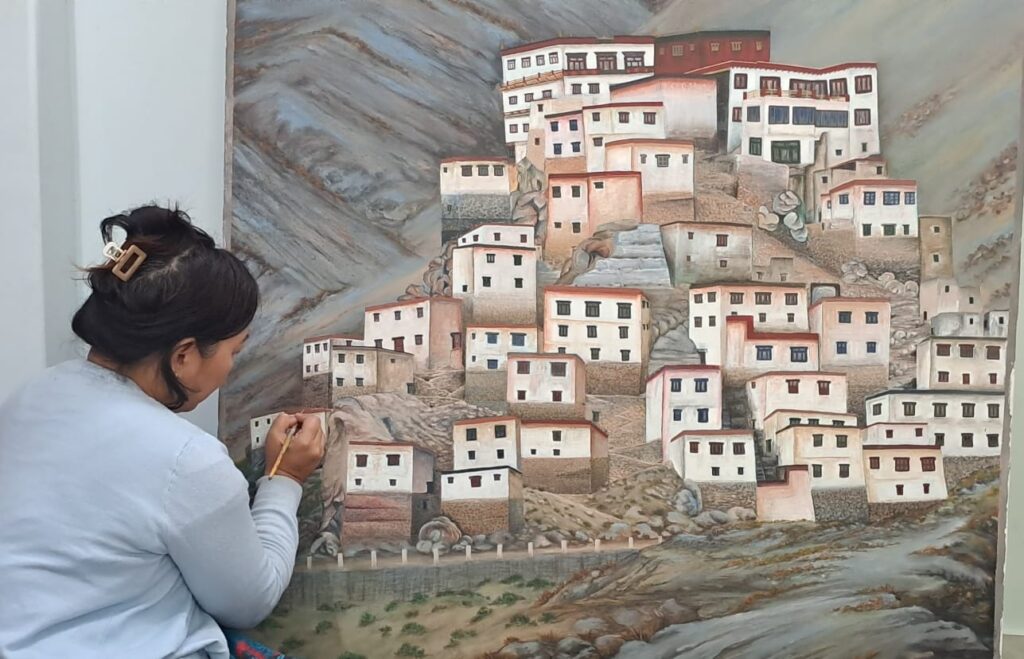
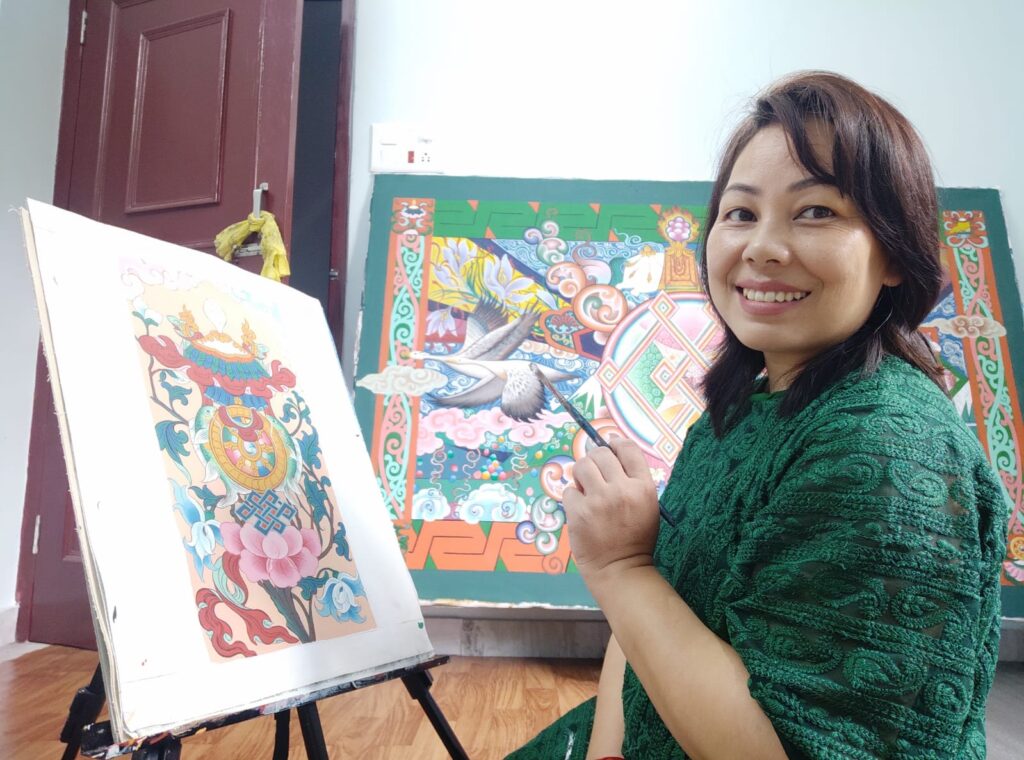
Krishna is a rare and resolute voice in the world of Thangka painting, embodying discipline, courage, and quiet defiance. Affected by polio in both legs, she has never allowed physical limitation to define her artistic ambition. Instead, her practice stands as a testament to perseverance and inner strength, carried with an unwavering smile.
Driven by a childhood dream of becoming an artist, Krishna trained in traditional Thangka painting at a Tibetan art school in the Lahaul Spiti district of Himachal Pradesh between 2006 and 2012. In a cohort of nearly 350 students, she was one of only four women in a field widely considered inaccessible to them.
Beyond her own practice, Krishna teaches art to children at a local NGO, determined to build an identity rooted in skill, dignity, and gender transcendence.
What are your biggest learnings from 2025?
It was not an easy year, where amidst the turmoil of nature, there was the responsibility of maintaining emotional balance and fostering creativity. In 2025, the lesson learned was that no change is possible without inner strength.
What do you look forward to in 2026?
Art is the only way to express oneself better. 2026 is like every other year, where the effort is to keep art alive along with oneself. I prefer to work independently and with self-respect. I want to create a series of paintings that harmonise spiritual and independent sensibilities and share them with the world. I want to leave behind the regret of not being able to fulfil this wish from previous years.
Many lives have been dedicated to preserving life values, the voice of peace and compassion for 2,500 years, the message of Buddha. This is extremely necessary today and will be even more so tomorrow. Preserve it. Let art not end with the artist. Fulfil your duty.
What brings you happiness?
I have a power that reaches far beyond me, faster and better, through my art. Thangka speaks of human qualities, compassion, peace, and duties, of harmony and interdependence with nature, which will endure for ages, as long as living beings desire happiness and liberation from suffering.